Thursday, July 26, 2012

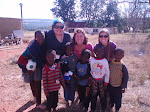
Goodbye Swaziland from Jacci

Never would I have known that saying goodbye today would have hurt so much. We have spent over a week bonding with so many people. But at the end of the day, we all wish for one more day, even one more hour to spend with the people that have become so dear to us.  I feel like I could endlessly name the names of the people that have impacted me. While each of these individuals has a different story and we come from opposite ends of the world, love is the common thread that binds us all together. Never in my life have I seen people that love so unconditionally and serve so selflessly. It was truly a beautiful thing to witness the love the caregivers have for others, and to experience firsthand the love they have for me. Because of this, Swaziland will forever be the country that stole my heart.

- Jacci
Goodbye Swaziland from Danielle

If I could bring my friend Jabu and a little girl, a 10 year old orphan to America a big part of me would be at peace. But the reality is they must stay in Swaziland and I must go back to America. I can’t wait to reunite with my two beautiful daughters and loving husband.

Torn in two - Danielle
Goodbye Swaziland from Lauren Anin

Wow. The last day came so quickly. Who knew such deep friendships could be formed in such a small amount of time? We have met lifelong friends here; brothers and sisters to whom we are connected to by a loving, merciful God. It’s overwhelming the amount of work to be done here. However, it is also overwhelming to see the hands and feet of those doing amazing works here already. What the caregivers do; how far they walk, how hard they work, and the things they see day in and day out; is almost too wonderful to understand. They are truly the image of Jesus we all should strive toward being. I can only hope to bring home a fraction of their grace and faithfulness; to completely give of myself as a servant to Christ.

                                                                                                            Lauren (Tibusiso)

Saturday, July 21, 2012


I’ve loved experiencing this trip through the eyes of people who are filled with anticipation about Swaziland and its people; especially the SHBC caregivers who we are serving with.  God is filling this trip with laughter and tears.  Our Swazi friends are loving on our team, and the team is really loving on our Swazi friends. 

One image that jumps out to me as I think back on the past few days is a young boy of maybe 11 years, carrying his baby brother on his back to come to the care point for food.  These brothers are classified as OVC (orphan or vulnerable child) because they have lost one or both of their parents.  They might live in a homestead with a GoGo or an aunt or uncle.  The likelihood is however, is that they do not have a home with the kind of care and love that two parents provide.  Most surely, they must do a lot of fending for themselves, and are in many ways robbed of what we in America would consider a “normal childhood.”  While this might not be common in Swaziland, I know that neither is it unusual. 

Wendi - Khanyisile


I started my journey to Swaziland having no idea what God had in store for me.  But, I knew it would surpass all my understanding and I would never be the same.  This entire experience has humbled me from the beginning when God first tugged at my heart.  This is an opportunity I never imagined I would ever have, but because God loves me through my friendships  . . . man did He make a way. 

The people here are so accepting and loving.  I’ve never felt so loved and accepted completely and unconditionally.  At this point my prayer is that I can bring this unconditional love and acceptance home, with all the love in my heart.

Danielle (or my Swazi, Jabulile, which means joyful)


It is so hard for me to express all the emotions I have experienced in these few days.  I feel so much love from the women in Swaziland, you can feel the love they have for the Lord.  Yesterday I was given the opportunity to serve along side a caregiver.  I assisted, Shorty, the caregiver in wound cleaning to an elderly man named John.  He has a leg wound that is badly infected.  He lost all his toes in his right foot, looked like ½ his right foot was amputated.  I felt so much love and compassion for John.  He was so greatful for our prayers and visit; he had such a warm spirit.  I see poverty, but I also see  the  love they have for the Lord.   Today, I was given my Swazi name, Thoko which stands for happiness. 

Thank you for the opportunity through your donations, making it possible for me to be the feet and hands of Jesus. Continue to pray for our team and the purpose God has for us here.

Angie Reyes


Greetings from Swaziland!  Three consecutive flights with no break does a number on equilibrium, sleep patterns, time and space.  But here we are adjusted and having an amazing experience.  We have met some wonderful people, dedicated servants and caregivers.  Our team has already had opportunities to participate in serving alongside some of the local caregivers.  The country side is beautiful with rolling hills, trees and fields of corn.  We see people who are joyful in life and accomplishing great things for God.  I am thrilled to be here and part of this diverse team of Project Glory pilgrims.

Blessings - Henry Pauls (Sipho—my Swazi name which means gift)


Sanibonani from Swaziland! We are at the end of day two… Which is an interesting feeling in that, as we discussed as a team tonight, each day feels like an all encompassing experience that leaves us exhausted (feeling like we’ve been here longer), energized (feeling blessed for the time we’ve been given), and excited (wishing we could stay even longer). I, personally, have been astonished by the amount of information I have consumed in just the past couple of days. I have learned so much about this community, these caregivers, and, through the aforementioned, about Christ; and we still have 6 days to go! Tonight, we discussed as a team what we hoped to accomplish in the remainder of our time here. For me, it would be that I continue to learn, as much as I can, about what God is doing here in Swaziland and what my role in His plan would be. I would ask that friends and family continue to pray for our team, as well as for the caregivers and community members that we are encountering. They truly serve others the way Christ served others, and we can only hope to bring back their zest for that commission.

In Him - Lauren Annin (Tibusiso – my Swazi name)   


Wednesday, July 4, 2012

Sanibonani Swaziland
In just a week a group of men and women from Fresno will be traveling again to Swaziland to serve with the caregivers from Shiselweni Home-Based Care.  We will be helping to assemble and deliver wheelchairs from Free Wheelchair Mission.  We will be taking over bras and caps that have been collected by many of our friends and family members in Fresno.  These aren't really needs, but rather just offered as gifts that will bless the SHBC caregivers.  What is needed is adult diapers, and our friends have also helped us gather up many packages of these for us to take.  We will also be making jewelry with the artisans (and caregivers) from The Bambanani Project.  We'll be bringing home many of their pieces to sell here in the US, helping them with a sustainable income.

We will try to post a few entries and pictures on this blog from teammembers while we're gone.  We'll appreciate your prayers for effective work and relationship building.  Check in throughtout July for updates.  Sala Kahle for now!!

Tuesday, April 19, 2011

Remembering Maria

It seems fitting to remember Maria Mavuso during Passion Week. Maria went home to be with the Lord last month. She was a simple, uneducated widow who lived in desperately poor circumstances. Unlike some of the other SHBC volunteers, Maria spoke almost no English, so our previous mission teams weren't able to learn much of Maria's story. It turns out that she, like other SHBC volunteers, also had AIDS. We can only speculate about how she acquired the disease, but a likely scenario is that her husband, as is often the case with Swazi men, had multiple sex partners and brought AIDS home to Maria (and possibly other wives).

If I were in Maria's situation, I would probably stay home in bed, immobilized and victimized, allowing my family and friends to care for me. But Maria didn't allow her poverty, lack or education or AIDS to keep her from serving others. Every morning Maria got up, walked miles to collect firewood and water, then started a fire and cooked for hours so the Dwaleni orphans could have a nutritious mid-day meal. And in addition to these community orphans, Maria went to her simple home every evening and cared for two more children who had been orphaned by AIDS.

This Easter, as you think about the challenges you face which might be preventing you from living sacrificially, consider Maria and the sacrifices she made in spite of her desperate situation. When I think about Maria and the way she she lived, "being Jesus", she encourages me to do more of the same.

Thursday, March 17, 2011

Mission work St Patrick's way

In the late 4th or early 5th century, Patrick was growing up in an aristocratic family in what is now northeast England. At about the age of 16 he was captured by Celtic pirates from Ireland and sold into slavery. For about the next six years Patrick was a cattle herder for a prosperous tribal chief. During these years Patrick experienced three profound changes. First, during days in solitude in the beautiful wilderness he encountered God and became a man of prayer. Second, he developed a keen understanding of the Celtic peoples. Third, he came to love his captors and developed a deep hope that they would have reconciliation with God.


One night, after six years of captivity, a voice spoke to Patrick in a dream saying, “You are going home. Look! Your ship is ready.” The voice directed him to flee for his freedom the next morning. He awakened before daybreak, walked to a seacoast, saw athe ship, and negotiated his way on board.

Sunday, March 6, 2011

A mutiny in the body?

"At the central railway station in Madras, India, lay a beggar woman more pitiful than the others I saw there. She had positioned herself alongside the stream of passengers hurrying to catch their trains. Businessmen with briefcases passed by her, as did wealthy tourists and government officials.


Like many Indian beggars, the woman was emaciated, with sunken cheeks and eyes and bony limbs. But, paradoxically, a huge mass of plump skin, round and sleek like a sausage, was growing from her side. It lay beside her like a formless baby, connected to her by a broad bridge of skin. The woman had exposed her flank with its grotesque deformity to give her an advantage in the rivalry for pity. Though I only saw her briefly, I felt sure that the growth was a lipoma, a tumor of fat cells. It was part of her and yet not, as if some surgeon had carved a hunk of fat out of a three hundred pound person, wrapped in in live skin, and deftly sewed it on this woman. She was starving; she feebly held up a spidery hand for alms. But her tumor was thriving, nearly equaling the weight of the rest of her body. It gleamed in the sun, exuding health, sucking lie from her."

Monday, January 17, 2011

The Quest for Peace and Justice - Dr. Martin Luther King

On December 11th, 1964, Martin Luther King addressed the Norwegian parliament in Oslo Norway in his Nobel lecture entitled "The Quest for Peace and Justice." On this day in America, as we celebrate the life and legacy of MLK, I share a few excerpts from this great speech, as it speaks as powerfully today as it did in 1964, about our responsibility as Christian people to the engage in the struggle of the "least of these."


"Some years ago a famous novelist died. Among his papers was found a list of suggested story plots for future stories, the most prominently underscored being this one: "A widely separated family inherits a house in which they have to live together.


"This is the great new problem of mankind. We have inherited a big house, a great 'world house' in which we have to live together - black and white, Easterners and Westerners, Gentiles and Jews, Catholics and Protestants, Moslem and Hindu, a family unduly separated in ideas, culture, and interests who, because we can never again live without each other, must learn, somehow, in this one big world, to live with each other. This means that more and more our loyalties must become ecumenical rather than sectional. We must now give an overriding loyalty to mankind as a whole in order to preserve the best in our individual societies.


"This call for a worldwide fellowship that lifts neighborly concern beyond one's tribe, race, class, and nation is in reality a call for an all-embracing and unconditional love for all men. This oft misunderstood and misinterpreted concept so readily dismissed by the Nietzsches of the world as a weak and cowardly force, has now become an absolute necessity for the survival of man. When I speak of love I am not speaking of some sentimental and weak response which is little more than emotional bosh. I am speaking of that force which all of the great religions have seen as the supreme unifying principle of life . . . .


"Let us hope that this spirit will become the order of the day . . . . "

Friday, December 10, 2010

What if gratitude was a verb?


Last week on World AIDS Day I showed the film A Grandmother’s Tribe at our church, to a room of mostly Jr. High kids and a few adults. It is a story of two grandmothers from Kenya who are preparing for their Christmas celebrations and raising their grandchildren because their own children have died from AIDS. One thread that was woven through the movie, from the grandmothers and the grandchildren, even though they lived in terrible poverty with unbelievable hardship - - - is GRATITUDE. This really struck my CCC teammates, Dion and LJ, and they’ve been talking about it since; how little we Americans understand about how grateful we should be, how often we Americans seem to confuse wants with needs and are disappointed when we don’t have things that are complete luxuries for most people in the world (especially at Christmas).

Since the film’s showing numerous people have asked to borrow my DVD and have expressed that they want their kids to watch it so they will feel more grateful. I should be thrilled with this, more people spreading the word about the injustice and plight of people in Africa. Right? But for some reason this sudden interest in helping people feel more grateful troubled me. Thinking and praying about this unusual response for the past few days, I finally realized what is that is bothering me. GRATITUDE IS JUST A NOUN.

Tuesday, October 12, 2010

If I had a sinus problem in Swaziland . . .


. . . well actually, if I lived in Swaziland the odds are I wouldn’t know that I had a sinus infection.  If I noticed a few symptoms, I wouldn’t think of going to the clinic for what seems like a minor discomfort. There would be no lab tests, no X-rays or CT scans. I wouldn’t worry about taking antibiotics too often and lowering my resistance; there are no antibiotics available. I wouldn’t be considering treatment options; there is no treatment and are no options. I wouldn’t learn how to rinse out my sinuses with warm, clean saline water; there is no clean water available and certainly no place to purchase a little product like a Nettie Pot. I would learn to live with the burning eyes, the green, smelly mucus coming out of my nose, the pressure headache. And as my life went on, if I experienced more pain and discomfort or perhaps even more serious issues like meningitis, brain abscess or infections in my eyes or scull, I would have no idea that these problems were connected to living with an infection that would have been easily treated in most of the world.

Sunday, August 8, 2010

Thank you Willow Creek Leadership Summit

Friday August 6, 2010 - Two years ago today my life changed forever at the Willowcreek Summit. I had just returned from Swaziland, Africa, feeling called to continue serving there but frustrated that the local people we had come to love seemed unwilling or unable to participate in their own solutions. Volunteerism was nearly non-existent. Instead they seemed dependent on us (and other western help) to address the complex problems they faced every day. I sensed that the help we offered was not really helpful, at least in a sustainable way, but didn’t know what to do differently.

Tuesday, June 29, 2010

Prayer for weary leaders . . .

I read this on the "Lausanne Movement" blog this morning, written by Mary DeMuth, a missionary / church planter who now lives in Rockwell, TX. It lifted me, perhaps it will you also - Wendi Hammond


As a former church planter in France, I remember weariness. There were times I’d fly back to the states for writing related work. I could barely share my story without saying words like, "I feel like I’ve been through a war." We suffered greatly in every way possible as we worked to plant a church. We lived and breathed by God’s sufficiency. But underneath all that undergirding power lay the tenacious, persistent prayers of others.

When we left for France, our church’s global prayer team gave us a significant gift--a framed piece of rope. They said they were holding the rope for us, an anchor to our journey.


Hold the rope they did, as did so many others.


Today my heart is heavy for leaders who are weary and discouraged as we were. I remember the fatigue, the bone-tired wearineses, the discouragement. And I remember the deliciousness of discovering God’s sufficiency when we were weak. So in that spirit, may I offer up a prayer for you?

Wednesday, May 26, 2010

The Lazarus Effect

I want to share a few thoughts with you about a new HBO documentary called The Lazarus Effect about the use of Anti-retroviral treatment for HIV/AIDS in Africa. But first, a few comments about the biblical story from which the title comes.


I think it is interesting that before performing the miracle, Jesus stopped in town to pick up the sisters, Mary and Martha, and the crowd of mourners. And he wasn't just looking for an audience; He was looking for partners! Consider His words starting in John 11:38: Then they came to the grave. It was a cave with a stone rolled across its entrance. "Roll the stone aside,” Jesus told them .

Jesus could have commanded the stone to move. In fact, a stone moving by itself might have made the overall miracle seem even more impressive! But He knew the impact of a miracle shared by an interdependent community, so Jesus made them partners.

But what he asked next would require more from them than simple stone moving. He would ask them to become humble, vulnerable and genuinely compassionate by getting dirty. Touching a dead person would cause them to become unclean, unacceptable themselves. Jesus knew this, yet in verse 43 He said: "Lazarus, come out!" And Lazarus came out, bound in graveclothes, his face wrapped in a headcloth. Jesus told them, "Unwrap him and let him go!"

Rereading this passage, it occurs to me that there are two types of Lazarus effects. First is the obvious and miraculous transformation in the recipient from the healing touch of Jesus. Less obvious but perhaps even more powerful is the transformation that happens in the hearts of the stone rollers and unwrappers. The biblical story ends with Lazarus out of the tomb, unwrapped and alive. We know what happened to Lazarus and can imagine how the memory of being raised from the dead changed him forever. What we don’t know is how those who participated in the miracle were different, yet I think it is fair to imagine they also were also changed forever. When we are willing to get dirty, Jesus uses us and changes us at the same time.

The HBO documentary, The Lazarus Effect depicts the miraculous transformation in AIDS victims, in just 40 days, from getting onto an anti-retroviral regiment that costs just .40 cents per day. As we learn how ARV’s restore life to AIDS victims, we also hear Jesus calling us again to become His partners; to roll away stones and take off grave cloths.

Watch this 30 minute documentary here: The Lazarus Effect

Monday, May 3, 2010

An Athiest on The Good Samaritan

Self proclaimed atheist Peter Singer, Princeton University bioethics professor says this:

The path from the library at my university to the Humanities lecture theater passes a shallow ornamental pond. Suppose that on my way to give a lecture I notice that a small child has fallen in and is in danger of drowning. Would anyone deny that I ought to wade in and pull the child out? This will mean getting my clothes muddy, and either canceling my lecture or delaying it until I can find something dry to change into; but compared with the avoidable death of a child this is insignificant. A plausible principle that would support the judgment that I ought to pull the child out is this: if it is in our power to prevent something very bad from happening, without thereby sacrificing anything of comparable, moral significance, we out to do it. This principle seems uncontroversial.

Tuesday, April 13, 2010

A history lesson

Last week I had a short but interesting conversation about Africa with a friend. Reflecting back on the conversation now, it occurs to me that the perspective expressed by my friend might be one of many Americans. My friend, perhaps finally voicing a suppressed angst and cynicism about our work in Africa, said this (my summary):

“The fact that so much of the African continent seems to be caught in an endless cycle of disease, poverty, illiteracy and civil war is Africa’s own fault. The rest of the world managed to move through history learning how to overcome these things, and African people have had the same opportunity as the rest of the world to create their history. It is not our responsibility to rescue Africa from self-made problems, and doing so keeps Africa stuck in the cycle.”