Tuesday, October 12, 2010

If I had a sinus problem in Swaziland . . .


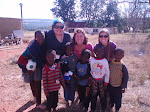
. . . well actually, if I lived in Swaziland the odds are I wouldn’t know that I had a sinus infection.  If I noticed a few symptoms, I wouldn’t think of going to the clinic for what seems like a minor discomfort. There would be no lab tests, no X-rays or CT scans. I wouldn’t worry about taking antibiotics too often and lowering my resistance; there are no antibiotics available. I wouldn’t be considering treatment options; there is no treatment and are no options. I wouldn’t learn how to rinse out my sinuses with warm, clean saline water; there is no clean water available and certainly no place to purchase a little product like a Nettie Pot. I would learn to live with the burning eyes, the green, smelly mucus coming out of my nose, the pressure headache. And as my life went on, if I experienced more pain and discomfort or perhaps even more serious issues like meningitis, brain abscess or infections in my eyes or scull, I would have no idea that these problems were connected to living with an infection that would have been easily treated in most of the world.

Sunday, August 8, 2010

Thank you Willow Creek Leadership Summit

Friday August 6, 2010 - Two years ago today my life changed forever at the Willowcreek Summit. I had just returned from Swaziland, Africa, feeling called to continue serving there but frustrated that the local people we had come to love seemed unwilling or unable to participate in their own solutions. Volunteerism was nearly non-existent. Instead they seemed dependent on us (and other western help) to address the complex problems they faced every day. I sensed that the help we offered was not really helpful, at least in a sustainable way, but didn’t know what to do differently.

Tuesday, June 29, 2010

Prayer for weary leaders . . .

I read this on the "Lausanne Movement" blog this morning, written by Mary DeMuth, a missionary / church planter who now lives in Rockwell, TX. It lifted me, perhaps it will you also - Wendi Hammond


As a former church planter in France, I remember weariness. There were times I’d fly back to the states for writing related work. I could barely share my story without saying words like, "I feel like I’ve been through a war." We suffered greatly in every way possible as we worked to plant a church. We lived and breathed by God’s sufficiency. But underneath all that undergirding power lay the tenacious, persistent prayers of others.

When we left for France, our church’s global prayer team gave us a significant gift--a framed piece of rope. They said they were holding the rope for us, an anchor to our journey.


Hold the rope they did, as did so many others.


Today my heart is heavy for leaders who are weary and discouraged as we were. I remember the fatigue, the bone-tired wearineses, the discouragement. And I remember the deliciousness of discovering God’s sufficiency when we were weak. So in that spirit, may I offer up a prayer for you?

Wednesday, May 26, 2010

The Lazarus Effect

I want to share a few thoughts with you about a new HBO documentary called The Lazarus Effect about the use of Anti-retroviral treatment for HIV/AIDS in Africa. But first, a few comments about the biblical story from which the title comes.


I think it is interesting that before performing the miracle, Jesus stopped in town to pick up the sisters, Mary and Martha, and the crowd of mourners. And he wasn't just looking for an audience; He was looking for partners! Consider His words starting in John 11:38: Then they came to the grave. It was a cave with a stone rolled across its entrance. "Roll the stone aside,” Jesus told them .

Jesus could have commanded the stone to move. In fact, a stone moving by itself might have made the overall miracle seem even more impressive! But He knew the impact of a miracle shared by an interdependent community, so Jesus made them partners.

But what he asked next would require more from them than simple stone moving. He would ask them to become humble, vulnerable and genuinely compassionate by getting dirty. Touching a dead person would cause them to become unclean, unacceptable themselves. Jesus knew this, yet in verse 43 He said: "Lazarus, come out!" And Lazarus came out, bound in graveclothes, his face wrapped in a headcloth. Jesus told them, "Unwrap him and let him go!"

Rereading this passage, it occurs to me that there are two types of Lazarus effects. First is the obvious and miraculous transformation in the recipient from the healing touch of Jesus. Less obvious but perhaps even more powerful is the transformation that happens in the hearts of the stone rollers and unwrappers. The biblical story ends with Lazarus out of the tomb, unwrapped and alive. We know what happened to Lazarus and can imagine how the memory of being raised from the dead changed him forever. What we don’t know is how those who participated in the miracle were different, yet I think it is fair to imagine they also were also changed forever. When we are willing to get dirty, Jesus uses us and changes us at the same time.

The HBO documentary, The Lazarus Effect depicts the miraculous transformation in AIDS victims, in just 40 days, from getting onto an anti-retroviral regiment that costs just .40 cents per day. As we learn how ARV’s restore life to AIDS victims, we also hear Jesus calling us again to become His partners; to roll away stones and take off grave cloths.

Watch this 30 minute documentary here: The Lazarus Effect

Monday, May 3, 2010

An Athiest on The Good Samaritan

Self proclaimed atheist Peter Singer, Princeton University bioethics professor says this:

The path from the library at my university to the Humanities lecture theater passes a shallow ornamental pond. Suppose that on my way to give a lecture I notice that a small child has fallen in and is in danger of drowning. Would anyone deny that I ought to wade in and pull the child out? This will mean getting my clothes muddy, and either canceling my lecture or delaying it until I can find something dry to change into; but compared with the avoidable death of a child this is insignificant. A plausible principle that would support the judgment that I ought to pull the child out is this: if it is in our power to prevent something very bad from happening, without thereby sacrificing anything of comparable, moral significance, we out to do it. This principle seems uncontroversial.